STEP 01
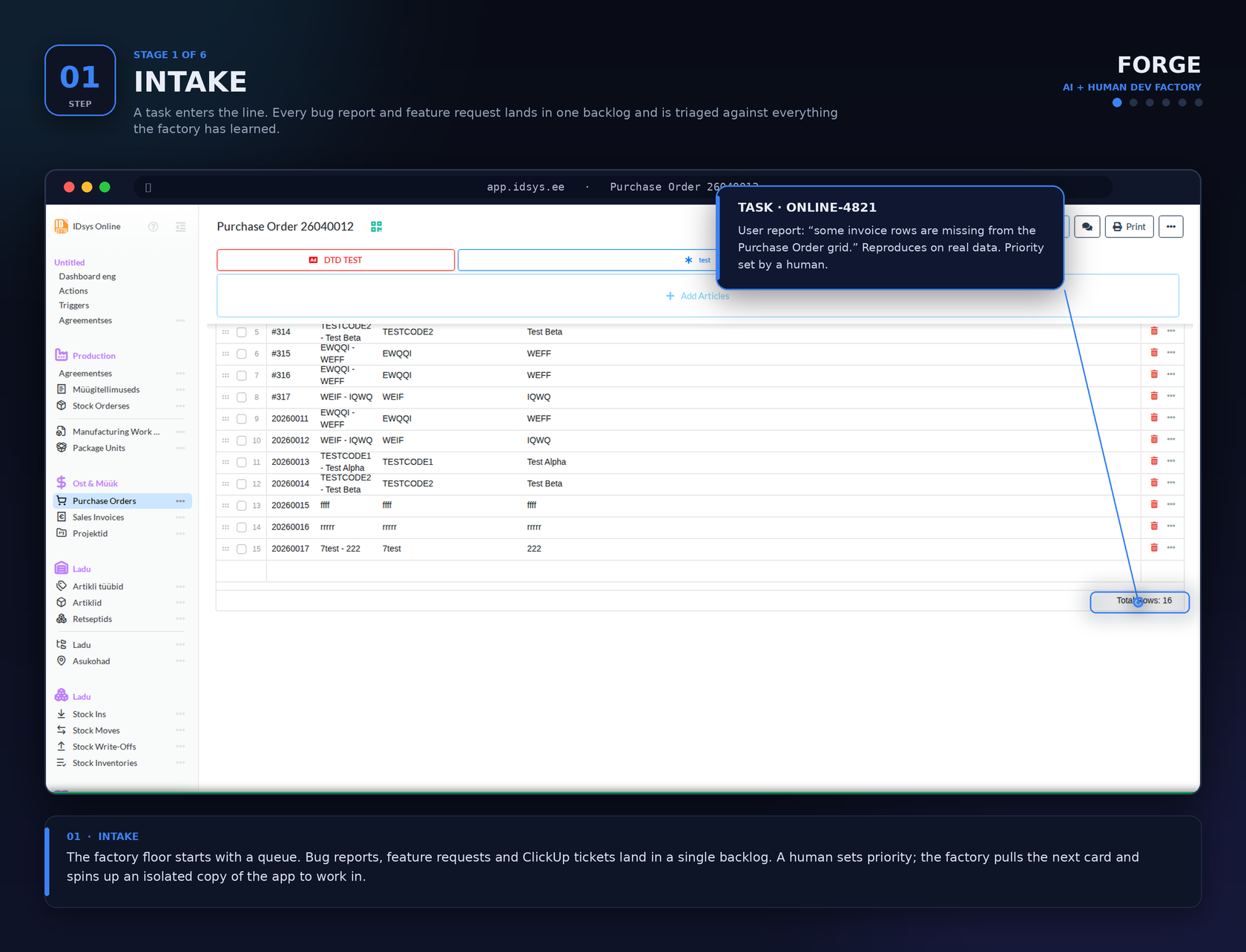
Intake — a task enters the line
A user reports missing rows in the Purchase Order grid. The ticket lands in the backlog; a human sets priority and the factory pulls the next card.
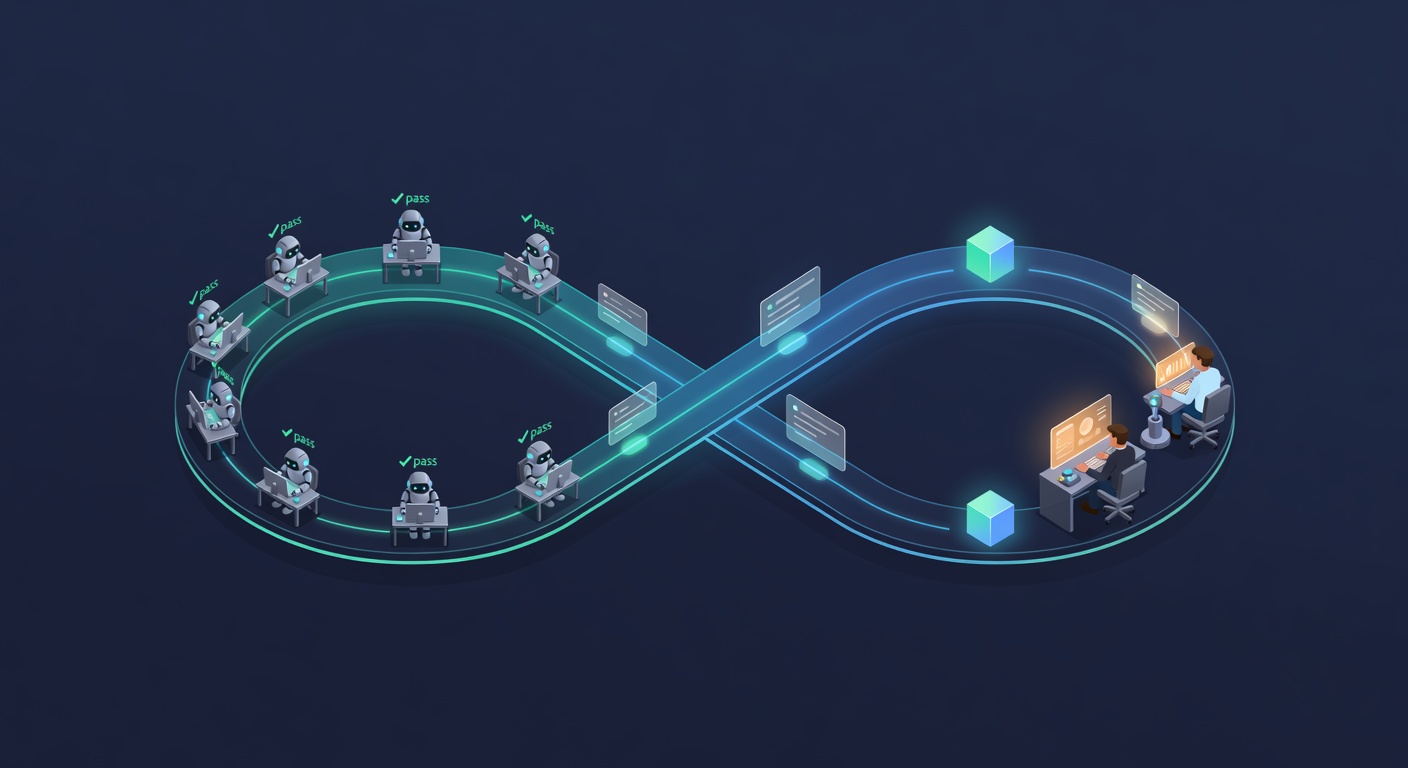
A software factory where AI agents do the building and the testing, and humans stay on the wheel. The same loop that ships your product today — drawn out, stage by stage, on the real UI it already runs on.

Every bug report and feature request enters a single backlog. An AI agent picks up a task in its own isolated copy of the app, diagnoses it against the real code and everything the factory has learned, writes the fix, and proves it with a measured screenshot it checks itself. A human then reviews the diff and the proof and approves the ship. Nothing reaches customers without a person’s sign-off — and nothing reaches a person without proof attached.
It’s a loop, not a line — every shipped fix teaches the factory, so the next one is faster.
These six mockups are built from real screenshots of the live product — the Alt-Y AI assistant and the IDsys Online data grid — annotated to show what happens at each stage. The bug in the story is a real one: a case-sensitive join that silently drops rows.
A user reports missing rows in the Purchase Order grid. The ticket lands in the backlog; a human sets priority and the factory pulls the next card.
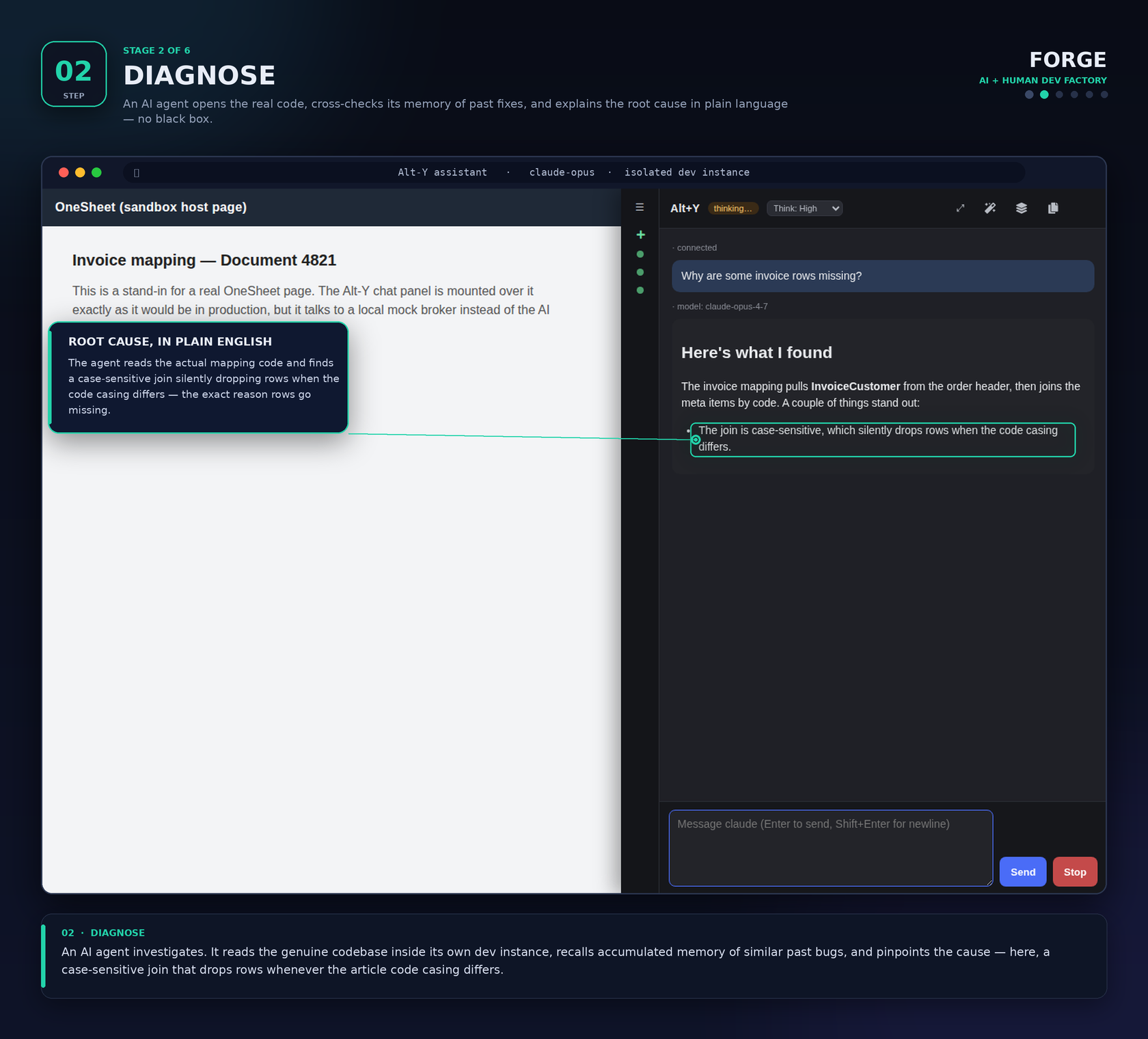
An agent opens the real code inside its own dev instance, recalls similar past bugs from memory, and explains in plain language why rows go missing: a case-sensitive join.
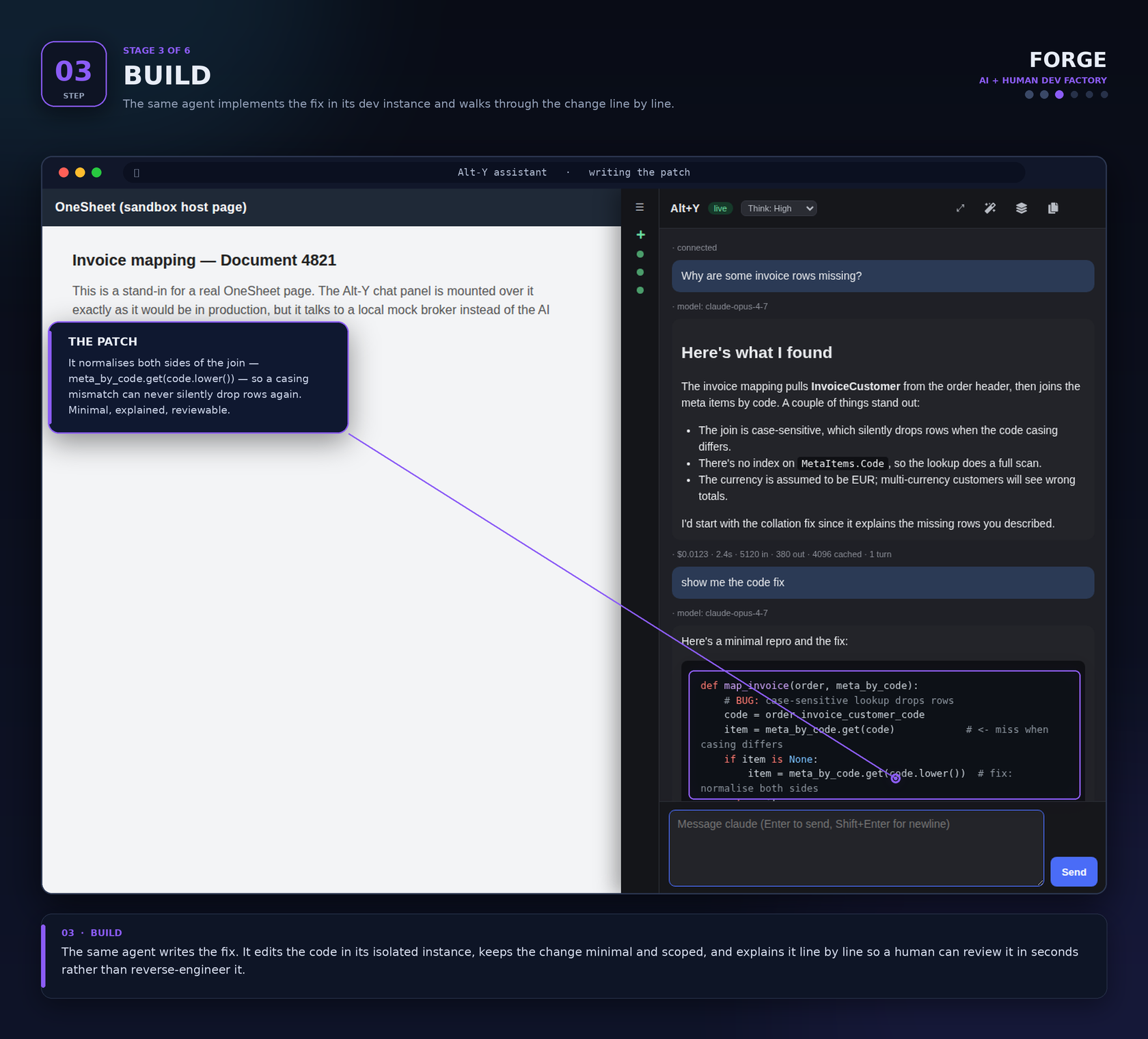
The same agent implements a minimal patch — normalising both sides of the join — and walks through the change line by line so it’s reviewable in seconds.
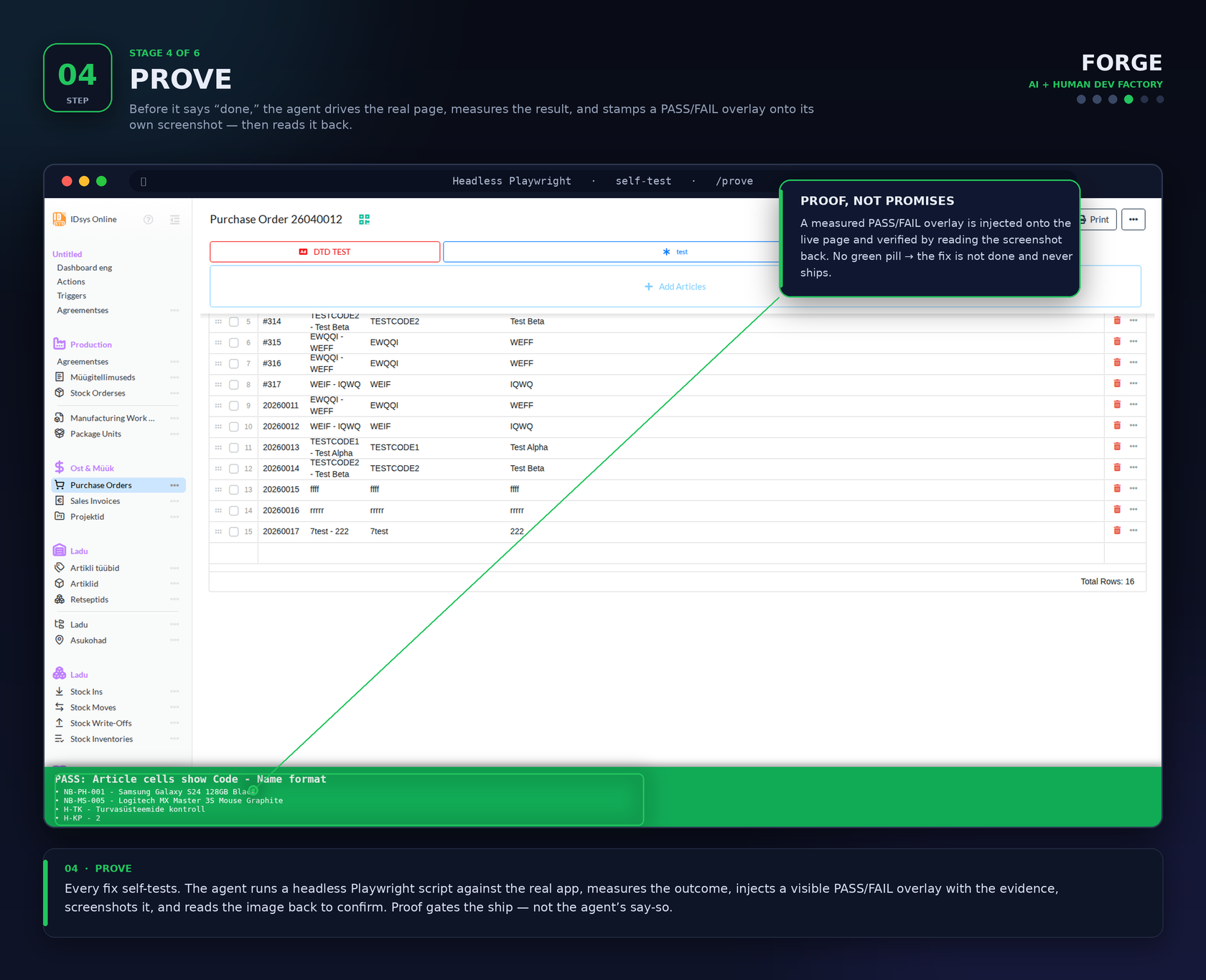
Before it says “done,” the agent drives the real page headlessly, measures the result, stamps a PASS/FAIL overlay onto its own screenshot, and reads it back. No green pill, no ship.
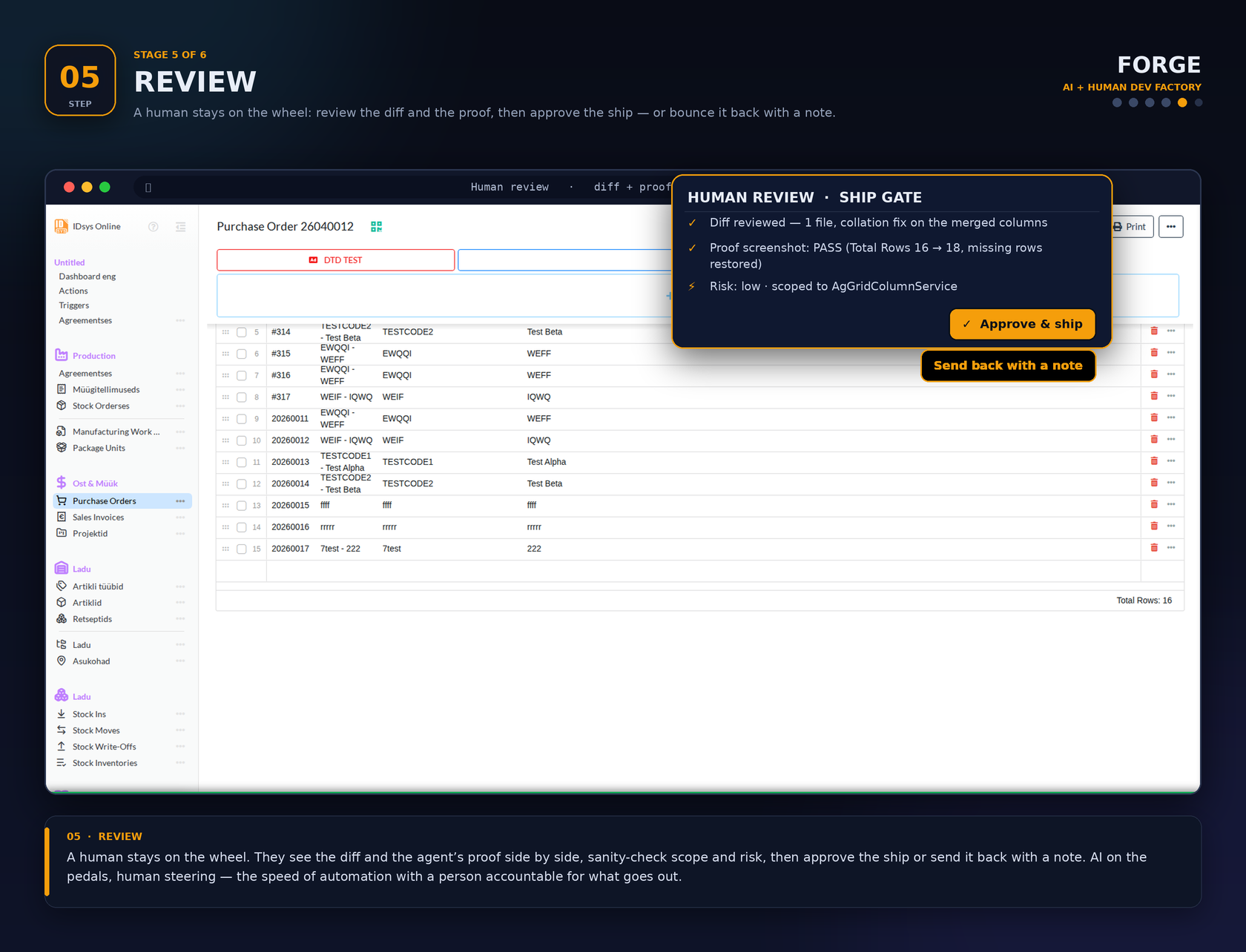
A person sees the diff and the proof side by side, sanity-checks scope and risk, and approves the ship — or bounces it back with a note. AI on the pedals, human steering.
The approved change flows testing → live behind the sign-off, and the agent writes the lesson to persistent memory — so the next bug of the same shape is solved in seconds.
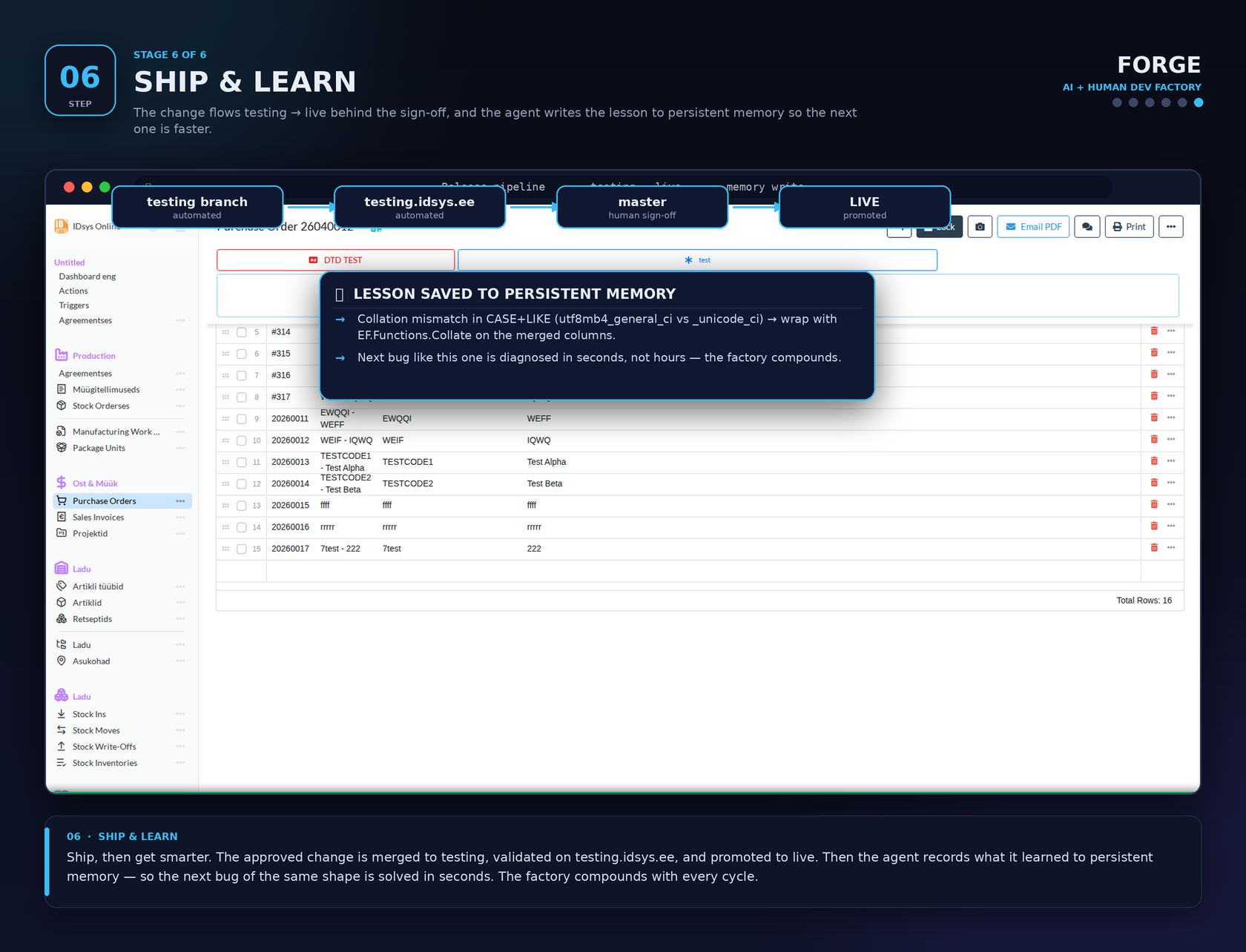
Why this example is real. The walkthrough isn’t invented UI — it’s the live Alt-Y assistant and the IDsys Online data grid, annotated. The bug is a genuine one the factory has fixed before: a CASE … LIKE join with a collation mismatch (utf8mb4_general_ci vs utf8mb4_unicode_ci) that silently drops rows. The fix — EF.Functions.Collate(...) on the merged columns — is exactly the kind of patch an agent builds, proves, and ships in this loop.
A forge is where raw material becomes a finished tool under a craftsman’s hand and real heat — fast, but never unattended. That’s the pitch: machine speed, human judgement. Short, ownable, reads well on a hero. A few alternatives I considered: